 BETA
EventNorth and South States Period
Completion of the Divine Bell of the Great King Seongdeok
771 CE · Unified Silla · Bongdeoksa Temple, royal capital of Silla
Today: Gyeongju, North Gyeongsang (held by the National Gyeongju Museum)
A giant bronze bell weighing 18.9 tons was completed, showing the level of Silla's metalworking.
What happened
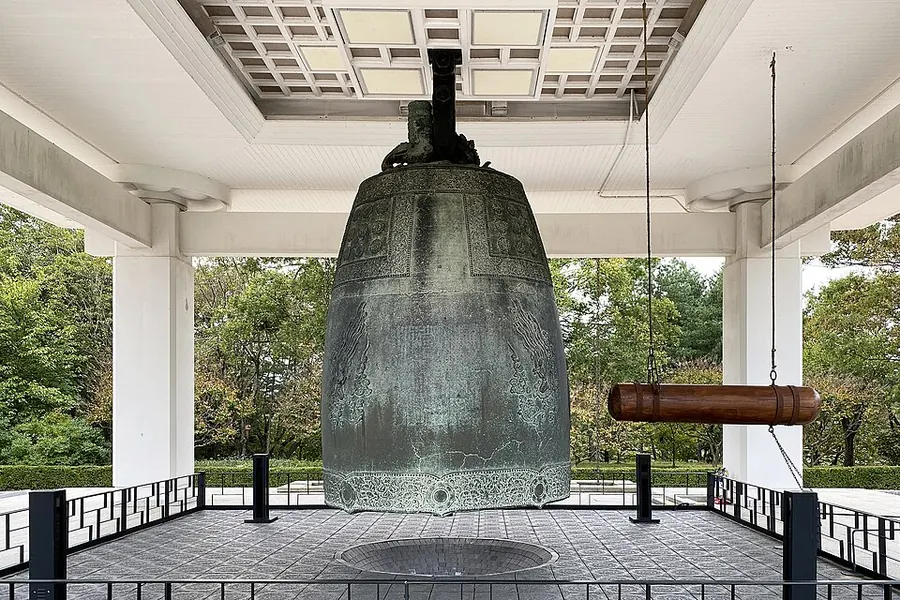
King Gyeongdeok began making a very large bell to honor his father, King Seongdeok. His son King Hyegong completed the bell in 771. It weighs about 18.9 tons, as heavy as 12 or 13 cars put together. It is the largest of the bells that remain in Korea today.
More detail
Two sources checked
Why it happened
King Gyeongdeok decided to make a very large bronze bell to honor the merits of his father, King Seongdeok. The Samguk Yusa records that King Gyeongdeok contributed 120,000 geun of brass.
But King Gyeongdeok died before the bell was finished.
What happened
His son King Hyegong took over the work, completed the bell in 771 (the 7th year of King Hyegong) and hung it at Bongdeoksa Temple. A long text of about 830 characters praising King Seongdeok's virtue is inscribed on the surface of the bell.
The bell is about 3.66 m high up to the loop at the top and about 2.27 m across the mouth. Its weight, measured in 1997, is about 18.9 tons, as heavy as 12 to 13 passenger cars put together.
What came of it
It is the largest of the bells that survive in Korea today, and because the year it was made is known exactly, it represents the Silla bell. The dragon-shaped loop, the sound tube (eumtong) that helps the sound, and the flying heavenly beings (biseon) show the features of Silla bells well.
After Bongdeoksa Temple was washed away by flood and disappeared, the bell was moved from place to place until it was moved to a museum in 1915, and then in 1975 to its present home, the National Gyeongju Museum.
People in this event
- King Gyeongdeok — He began making a large bell to honor his father.
- King Seongdeok — This bell was made to honor King Seongdeok's virtue.
- Hyegong — In 771 he completed the bell his father had started.