 BETA
Person
King Gyeongdeok
?–765 CE · King of Unified Silla · Unified Silla
Birth name: Kim Heon-yeong
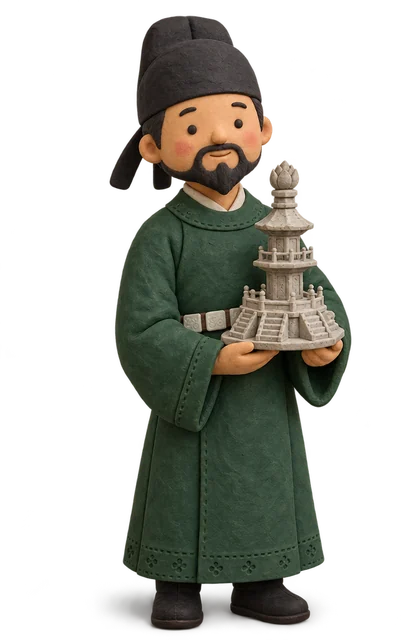
He was the king of Unified Silla at the time when Bulguksa Temple and Seokguram Grotto were built.
King Gyeongdeok was a king of Unified Silla. He reformed the system, for example by changing the names of local districts to Chinese-style names. At this time Kim Daeseong began building Bulguksa Temple and Seokguram Grotto. He also began making a great bell to honor his father, King Seongdeok.
More detail
Two sources checked
King Gyeongdeok was a son of King Seongdeok and a younger brother of King Hyoseong. Because King Hyoseong had no son, he became crown prince in 739, took the throne in 742, and ruled until 765.
King Gyeongdeok greatly expanded and reorganized the country's offices and posts. He newly created an office to supervise the growing number of officials, and he placed doctors (baksa) and assistants (jogyo) in the Gukhak (the national school). The astronomy doctor who observed the movements of the heavens and the nugak doctor who measured time with the water clock also came into being at this time. In 748 he set up towns in the Paegang region south of the Daedong River and began governing it in earnest.
The most striking thing was the changing of names. In 757 he changed the names of towns across the country to Chinese-style names in Chinese characters, and in 759 he also changed most office titles to Chinese style. The aim was to model the country on well-organized Chinese institutions and govern it with officials at the center.
In the same year, 757, he abolished the monthly salary (woldbong) given to officials and decided to give "nogeup" again. Nogeup were districts given to officials in place of a salary, and he revived what King Sinmun had abolished in 689.
Under King Gyeongdeok, great projects began, such as the building of the two pagodas at Bulguksa and the construction of Bulguksa and Seokguram. He also began making a great bell in honor of his father, King Seongdeok, and this bell was completed under the next king. It was a time when Silla Buddhist culture bloomed fully.
Life timeline
- 742 CEAscended the throne
- 748 CESet up towns in the Paegang region
- 757 CERevived nogeup and changed town names to Chinese style
- 759 CEChanged office titles to Chinese style