 BETA
Person
Ahn Chang-ho
1878–1938 · Independence activist · Korean Empire
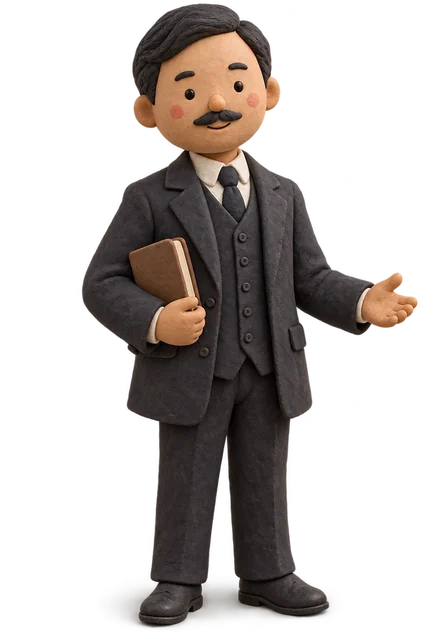
An independence activist who believed education and building one's abilities were the foundation of independence, and who led the independence movement by founding schools and the Heungsadan.
Does independence start with studying? Ahn Chang-ho believed that building strength was the foundation of independence. He founded Daesung School in Pyongyang, created the Heungsadan (Young Korean Academy) in the United States, and also worked in the Provisional Government in Shanghai. He was arrested by the Japanese police, and died of illness while in prison, but his teaching to build real ability honestly still lives on for us today.
More detail
Two sources checked
To win independence, which comes first: guns and swords, or study and strength? Ahn Chang-ho believed that raising good people comes first. He was born in 1878 in Gangseo, South Pyongan Province.
He studied new learning in Seoul and became well known by speaking at the Independence Club's Mansu Assembly (Manmin Gongdonghoe). In his hometown he founded Jeomjin School. To Ahn Chang-ho, the way to protect the country was first to raise people.
In 1902 he went to the United States, where he worked and gathered scattered Koreans to form a Korean community. In 1907 he came back and, with Yang Gi-tak and others, formed a secret society called the Sinminhoe (New People's Association). In 1908 he founded Daesung School in Pyongyang to train young people who could lead the country. It is a bit like gathering scattered friends into one group for a project.
As the country was about to be lost, he left for abroad again, and in 1913 he founded the Heungsadan (Young Korean Academy) in San Francisco, USA. He stressed that raising honest people with real ability was the foundation of independence.
In 1919 he served in the Provisional Government of the Republic of Korea in Shanghai as Minister of Home Affairs and acting Prime Minister, and set up the framework of the government. After Yun Bong-gil's attack in 1932 he was arrested by the Japanese police and jailed, and in 1937 he was arrested again in the Suyang-Donguhoe Incident. Because of an illness he got in prison, he died in Seoul in March 1938.
When we study and build our abilities today, that can become strength for our country and neighbors, too. Becoming the honest and capable person Ahn Chang-ho described is still a big assignment for us now.
Life timeline
- 1902Goes to the United States
- 1908Founds Daesung School in Pyongyang
- 1913Creates the Heungsadan
- 1919Becomes Minister of Home Affairs of the Provisional Government
- 1932Arrested in Shanghai after Yun Bong-gil's act
- 1937Arrested again in the Dongwuhoe case
Related events
- 1907The Sinminhoe and the Patriotic Enlightenment Movement
- 1908The Sinminhoe's Taegeuk Bookstore and Porcelain Company
- 1910Founding of the Korean National Association
- 1913Founding of the Heungsadan
- 1919Founding of the Provisional Government of the Republic of Korea
- 1919The Provisional Government's Yeontongje
- 1923The National Representatives Conference
- 1930Founding of the Korean Independence Party