 BETA
EventJapanese Colonial Period
Founding of the Provisional Government of the Republic of Korea
1919–1945 · Provisional Government of the Republic of Korea · French Concession, Shanghai, China
Today: Shanghai, China
After the March 1st Movement, in April 1919 a provisional government under the name "Republic of Korea" and a democratic republic system was set up in Shanghai, and it lasted for 27 years until 1945. Today's Constitution of the Republic of Korea states that it carries on this provisional government's legitimacy.
What happened
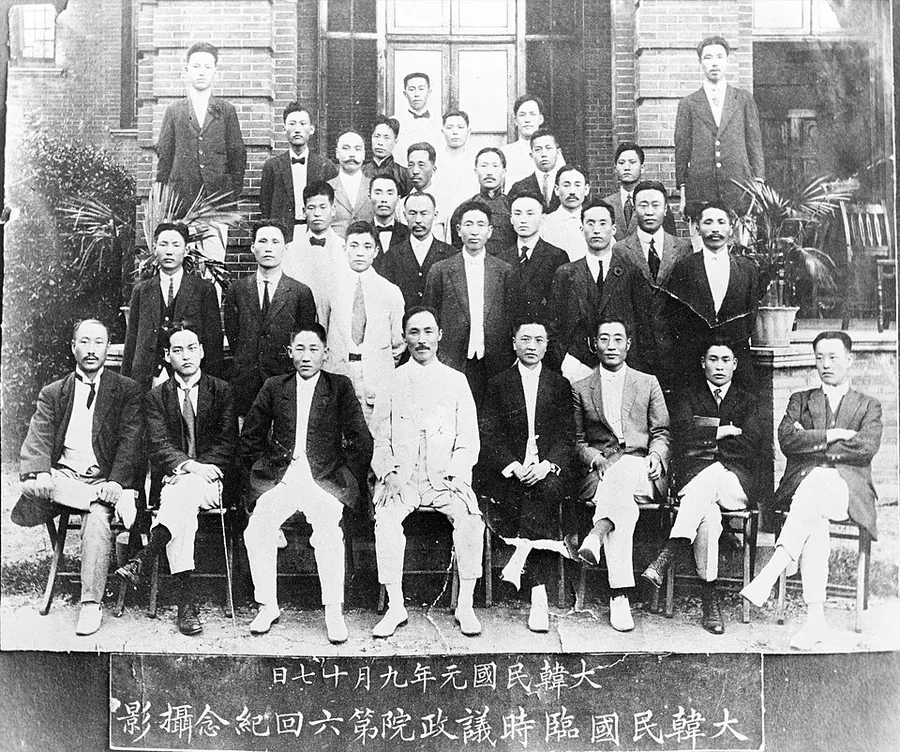
Could a government be set up without a country? After the March 1st Movement a government was needed to lead the independence movement, so the "Provisional Government of the Republic of Korea" was set up in Shanghai in April 1919, declaring a democratic republic in which the people, not a king, are the owners of the country. The provisional governments that had formed in several places merged into one in September, and it moved among many Chinese cities and lasted 27 years, until 1945. Today the Republic of Korea writes into its Constitution that it carries on the will of this provisional government.
More detail
Two sources checked
Why it happened
If the wish for independence was already so clear, why did people want to set up a government too? The March 1st Movement made the wish for independence clear, but a government was needed to lead the movement as one and to negotiate with foreign countries. It was like needing a group leader who picks representatives and gathers opinions when you want to hold a class event.
So in the spring of 1919, moves to set up a government began in several places, including Seoul (the Hanseong Government), the Maritime Province of Russia (the Korean National Assembly) and Shanghai in China. Since it started in many places at once, bringing them into one became the homework.
What happened
On April 10, 1919, in the French Concession of Shanghai (an area run by foreign powers), the Provisional Assembly (acting as a parliament) met for the first time and decided on the name "Republic of Korea" (Daehan Minguk). The word "minguk" carries the meaning of a country whose owners are the people, not a king. It was an important moment when thinking changed from a country ruled by a king to a country owned by its people.
The next day, April 11, it announced a provisional charter stating that "the Republic of Korea shall be a democratic republic." And in September that year, the provisional governments from several places merged into the one Provisional Government of the Republic of Korea in Shanghai. It was as if several groups gathered into a single team.
What came of it
What road did the provisional government take after that? It left Shanghai in 1932, moved among many Chinese cities, settled in Chongqing in 1940 and created the Korean Liberation Army. It lasted 27 years, from 1919 to 1945. Whether to see the end of the provisional government as its return home in 1945 or the founding of the government in 1948 depends on one's point of view.
In November 1945, Kim Gu and other leaders returned "as private individuals" at the request of the US military government. The Constitution of the Republic of Korea states that it carries on the provisional government's legitimacy, and since 2019 April 11 has been observed as its founding anniversary.
When we remember that the effort kept up for 27 years outside the country without giving up is a root of today's Korea, the weight of the words "the people are the owners" feels even greater.
People in this event
- Kim Gu — He began as head of the police bureau and later became chairman and led the government.
- Ahn Chang-ho — As Minister of Home Affairs and acting Prime Minister, he set up the framework of the government.
- Syngman Rhee — He became the first president but was impeached and removed from office in 1925.
- Bak Eun-sik — In 1925 he became the second president of the Provisional Government.
- Yi Dong-nyeong — He became the first speaker of the Provisional Legislative Assembly and led the push to found the government.
- Jo So-ang — He took part in writing the Provisional Charter and helped establish the Provisional Government.
- Kim Kyu-sik — He served as Minister of Foreign Affairs, Minister of Education, and head of the European and American Committee.
- Yi Gwang-su — He was publisher and chief editor of the Independence News, published by the Provisional Government.
- Yi Sang-ryong — In 1925, in Shanghai, he became Premier of the Provisional Government.
- Yi Si-yeong — He helped found the government and served as Minister of Finance for many years.
- An Hui-je — He sent money raised through his trading company to the Provisional Government.
- Kim Chang-suk — He went to China and worked as a member of the Provisional Legislative Assembly.
- No Baek-rin — He became Minister of Military Affairs, and in 1922 he served as prime minister.
- Sin Ik-hui — He played a major role in writing the Provisional Charter.
- Yi Dong-hwi — He became the first prime minister of the Provisional Government.
- Kim Sang-deok — Later he served as vice minister of education and head of the culture department in the Provisional Government.