 BETA
Person
Jeongjo
1752–1800 · 22nd king of Joseon · Joseon
Birth name: Yi San
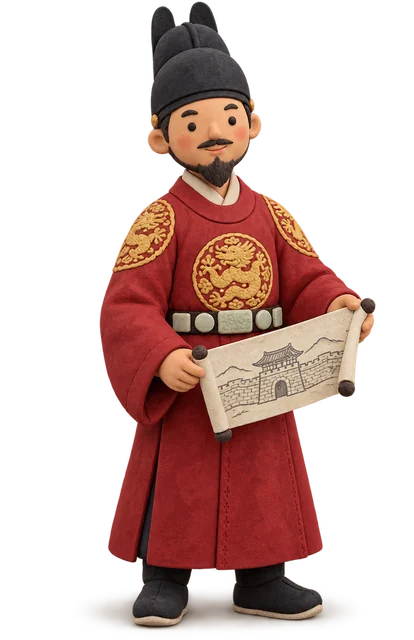
King Jeongjo, son of Crown Prince Sado, became king in 1776 at age 25 and dreamed of reform through Kyujanggak and Hwaseong Fortress in Suwon, but after his death in 1800 the era of in-law rule (sedo jeongchi) began.
How did Jeongjo dream of reform even after losing his father? Jeongjo, son of Crown Prince Sado, became king in 1776 at age 25. He set up Kyujanggak to train talented people and, with the Sinhae Tonggong, let more people do business. He also built Hwaseong in Suwon, but after he died in 1800, the era of in-law rule began. His story tells us that raising people is what lasts.
More detail
Two sources checked
How did an 11-year-old boy who lost his father become a king who led the country? Jeongjo's given name was Yi San, and he was the son of Crown Prince Sado and Lady Hyegyeong of the Hong clan. In 1762, when he was 11, his father was shut in a rice chest and died, and even as crown grandson he always lived in danger because of forces trying to bring him down. In 1776, when his grandfather King Yeongjo died, he took the throne at age 25.
Right after becoming king, he founded Kyujanggak (a royal library and research institute). He chose young officials, had them study again, and trained them into talents who shared his goals. He picked Yi Deok-mu, Yu Deuk-gong and Bak Je-ga, whose paths to office had been blocked because they were sons of concubines, as geomseogwan (officials who checked and organized books). It was like choosing as class officers those friends who had skill but never got a chance.
Like his grandfather, he continued the Tangpyeong policy (balancing the factions) and built up the king's power. He created the Jangyongyeong, a unit to protect the king, and made several sets of new type to publish many books. In 1791, with the Sinhae Tonggong, he cut back the trade monopoly that only big merchants had enjoyed, so that more people could trade freely. It was like getting rid of the few kids who cut in line at lunch so everyone eats in order.
After moving his father's tomb to Hwasan in Suwon, he built a new city, Hwaseong, at the foot of nearby Paldalsan (1794-1796). He also held his mother Lady Hyegyeong's 60th birthday party at the Hwaseong palace. It may have been a city that held both his longing for his father and his dream of reform.
Jeongjo was a scholar-like king who left many of his own writings in the collection Hongjae Jeonseo. He died in 1800 at age 49, and when his young son Sunjo took the throne, the era of in-law rule began, in which a few families held power. His story tells us today that reform is hard to carry on by one person alone, but that raising people is still what lasts.
Life timeline
- 1759Becomes crown grandson
- 1775Takes charge of state affairs on Yeongjo's behalf (regency)
- 1776Takes the throne
Related events
- 1746Compiling the Sokdaejeon, Daejeon Tongpyeon and Daejeon Hoetong
- 1776Founding of Gyujanggak
- 1777The Movements to Open Office to Seoeol and Jungin
- 1788Founding of the Jangyongyeong (Jeongjo's Royal Guard)
- 1790Compiling the Muye Dobo Tongji
- 1791The Sinhae Tonggong
- 1794Building of Hwaseong Fortress in Suwon