 BETA
EventJoseon Period
Building of Hwaseong Fortress in Suwon
1794–1796 · Joseon · Hwaseong Yusubu (Suwon)
Today: Suwon, Gyeonggi Province, Korea
King Jeongjo built Hwaseong, a new planned city and fortress, in Suwon.
What happened
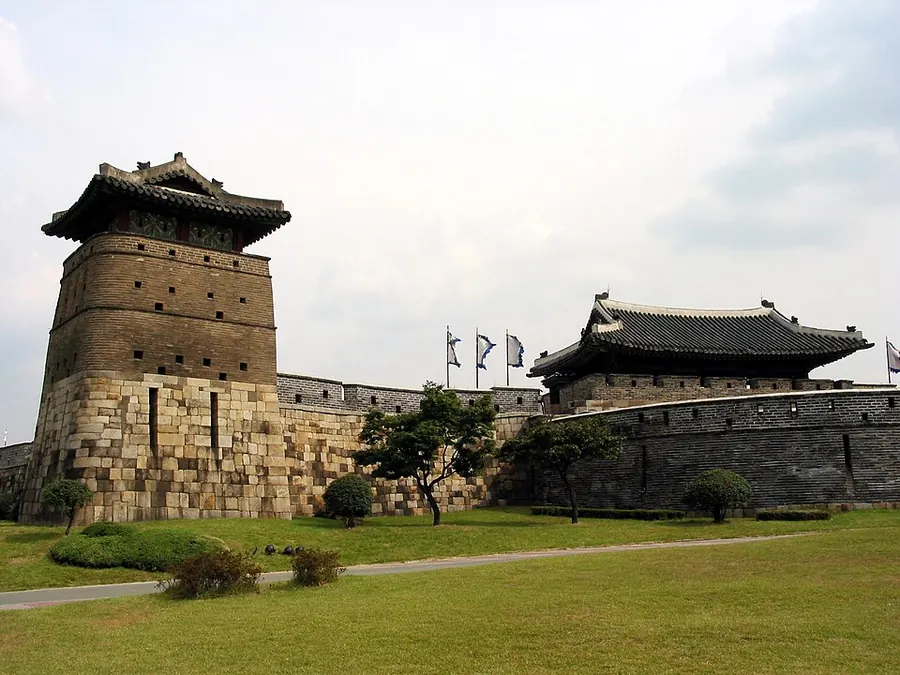
King Jeongjo moved the tomb of his father, Crown Prince Sado, to Suwon and built a new city and fortress near it. This is Hwaseong Fortress in Suwon, which was started in 1794 and finished in 1796, two and a half years later. Jeong Yak-yong came up with the geojunggi, a crane that lifts heavy stones easily. The building work was written down in detail in a book, so the damaged fortress could be rebuilt later.
More detail
Two sources checked
Why it happened
In 1789, King Jeongjo moved the tomb of his father, Crown Prince Sado, from Baebongsan in Yangju to Hwasan in Suwon and named it Hyeonryungwon. The original Suwon town that had stood on that site was moved and newly built at the foot of Paldalsan to the north.
Jeongjo meant to develop this new town into a place honoring his father, a place to strengthen the king's power, to guard the south of Hanyang, and a new city with lively commerce. In 1793 he changed Suwon's name to 'Hwaseong' and began preparations to build a fortress.
What happened
Construction began in the first lunar month of 1794, and the fortress was completed in the 9th month of 1796, in about two and a half years. The walls, longer than first planned, were about 5.7 km around, and four gates, water gates, watchtowers, and cannon-firing structures were built in various places.
Jeong Yak-yong submitted a design plan for the fortress and devised the geojunggi, a crane that used pulleys to lift heavy stones with little effort. The craftsmen and laborers who worked on the project were paid wages for the days they worked.
What came of it
The plans and process of the work, the money and people that went into it, and even drawings of the machines were all recorded in detail in the Hwaseong Seongyeok Uigwe (Report on the Construction of Hwaseong Fortress). Thanks to this, Hwaseong, which had been damaged during the Japanese colonial period and the Korean War, could be restored to close to its original form starting in the 1970s.
Suwon Hwaseong became a UNESCO World Heritage Site in 1997.
People in this event
- Jeong Yak-yong — He designed the fortress and invented the geojunggi, a crane for lifting heavy stones.
- Jeongjo — He moved his father's tomb to Suwon and had Hwaseong built.
- Chae Je-gong — He was given charge of the whole construction of Hwaseong Fortress.