 BETA
Person
Seong Sam-mun
1418–1456 · A scholar among the Sayuksin · Joseon
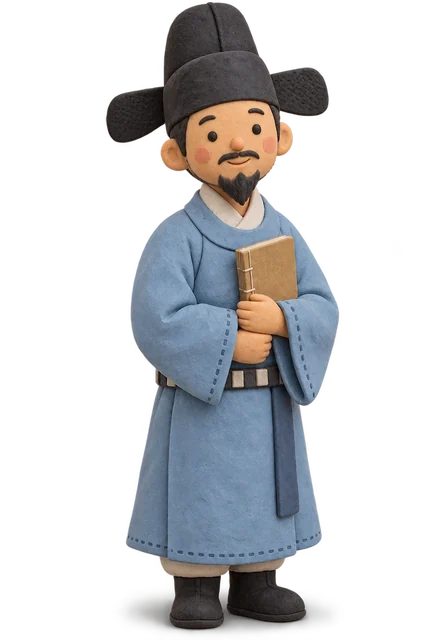
One of the Sayuksin (the Six Martyred Ministers), who took part in researching Hunminjeongeum and gave his life for King Danjong.
Seong Sam-mun was a scholar of the Jiphyeonjeon (the Hall of Worthies), a research institute inside the palace, and he helped make Hunminjeongeum. When Sejo took the throne from his nephew King Danjong, he tried to put Danjong back on the throne. This was discovered, and he was put to death in 1456. He is one of the six officials, the 'Sayuksin,' who did not bend their will.
More detail
Two sources checked
Seong Sam-mun was born in 1418 in Hongju, Chungcheong Province (present-day Hongseong). After passing the civil examination in 1438, he became a scholar of the Jiphyeonjeon (the research institute inside the palace).
When King Sejong created Hunminjeongeum, he was given, with Sin Suk-ju, the task of studying speech sounds and letters. Learning that the Ming scholar Huang Zan, skilled in the study of speech sounds, was in exile in Liaodong, he went there several times to ask and learn. He took part in writing the explanations and examples of Hunminjeongeum and also helped compile the Dongguk Jeongun, which organized the Korean pronunciation of Chinese characters. In 1447 he took first place in the Jungsi, the examination that officials take again.
In 1455 Grand Prince Suyang (King Sejo) took the throne from his young nephew Danjong. Seong Sam-mun saw this as seizing the throne in violation of Confucian principles, and together with his father Seong Seung, Park Paeng-nyeon and others he planned to put Danjong back on the throne. They set the day of a banquet for welcoming a Ming envoy in 1456 as the day of action, but the plan was postponed, and because Kim Jil, who had been part of it, reported it, they were arrested and executed.
For a long time afterward he was called a traitor, but in 1691 King Sukjong restored his office and his honor. Today he is remembered as one of the Six Martyred Ministers (Sayuksin), the six officials who kept their loyalty to the end.
Life timeline
- 1438Passed the civil examination
- 1442Selected for Sagadokseo
Together with his Jiphyeonjeon colleagues he was given leave to devote himself only to study. - 1447Passed the Jungsi in first place
He took first place in the examination that officials sit again.
Related events
- 1420Founding of Jiphyeonjeon
- 1443Creation and Proclamation of Hunminjeongeum
- 1448Publication of the Dongguk Jeongun
- 1456The Six Martyred Ministers' Movement to Restore Danjong